Overview
You can protect a 10 m² area of forest for just €10 at Ambalakalanoro Sanctuary in northwest Madagascar! That’s less than two fancy coffees, and it directly helps one of the last forest refuges for two Critically Endangered lemurs — the dancing Coquerel’s sifaka and the mongoose lemur. Pick your parcel on the interactive map and you’ll get a protector certificate plus annual impact updates.
Over a dozen people have already bought forest parcels — 1,684+ m² of primary forest is already protected.
But with 230 hectares (2,300,000 m²) total, there’s still plenty of paradise to go around!
Join Us: the Lemur Conservation Network is buying 20 parcels of forest!
Through our Supporting Membership program, LCN is purchasing d0 parcels (200 m²) of primary forest at Ambalakalanoro. Every dollar from our Supporting Members Program — individuals, zoos, and businesses who join at the Fan, Bronze, Silver, Gold, or Platinum level — helps fund this kind of direct conservation action. So when you become a Supporting Member, you’re not just supporting our work, you’re literally buying a piece of protected forest alongside us.
Here’s the challenge:
We’re buying 20 parcels. How many will you buy? Join us and let’s protect this forest together. Each parcel costs just €10, and every 10 m² protects lemur habitat.
If you’d prefer to donate through the Lemur Conservation Network so that your donation is tax deductible in the USA, please contact us and make a donation for $12 USD per parcel.
About Ambalakalanoro
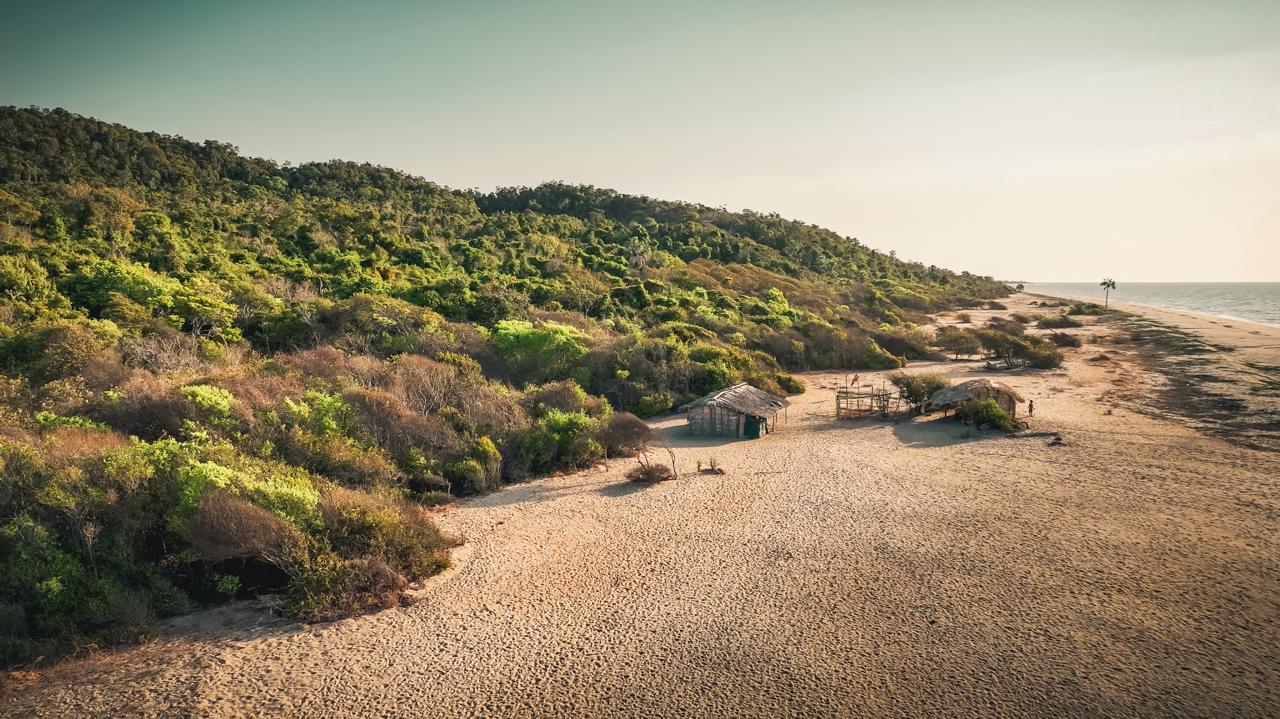
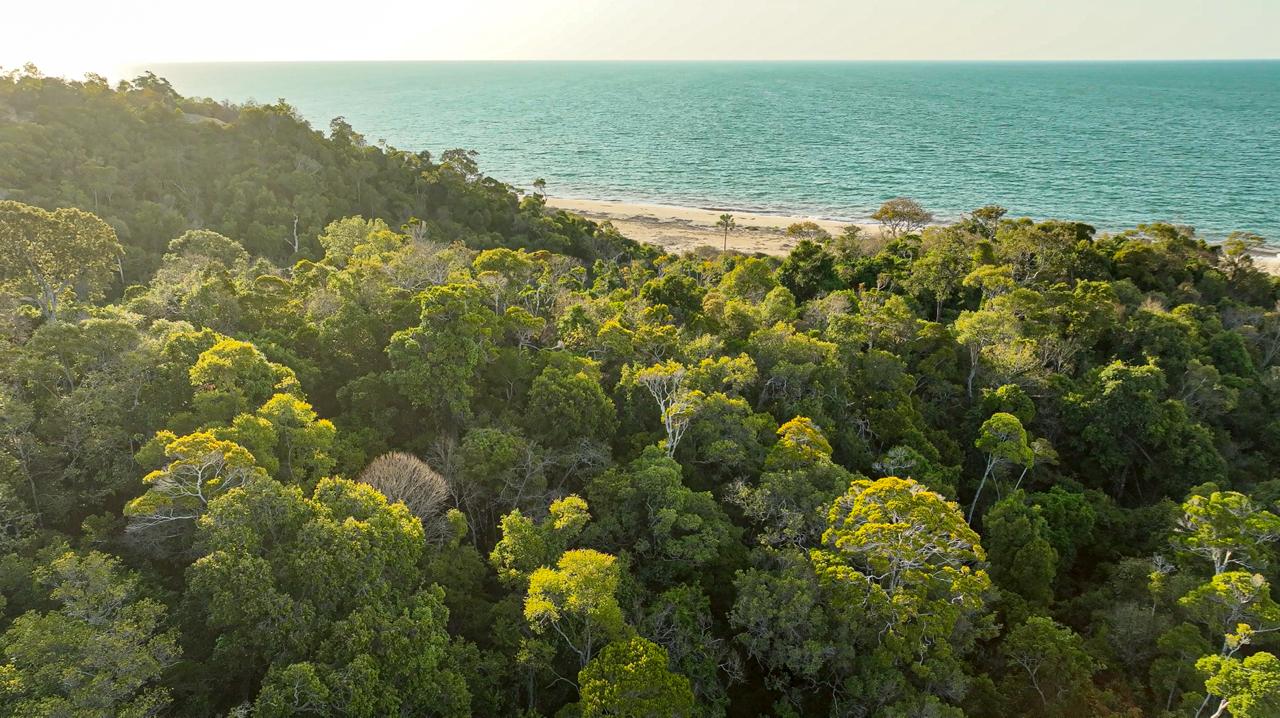
Ambalakalanoro Sanctuary is a dry forest on the west coast of Madagascar. The site covers about 230 hectares and rises from sea level to roughly 100 meters.
Key Lemur Species
Ambalakalanoro is a big deal for lemur conservation. It protects five lemur species, including two Critically Endangered (CR) species that make this forest especially important.
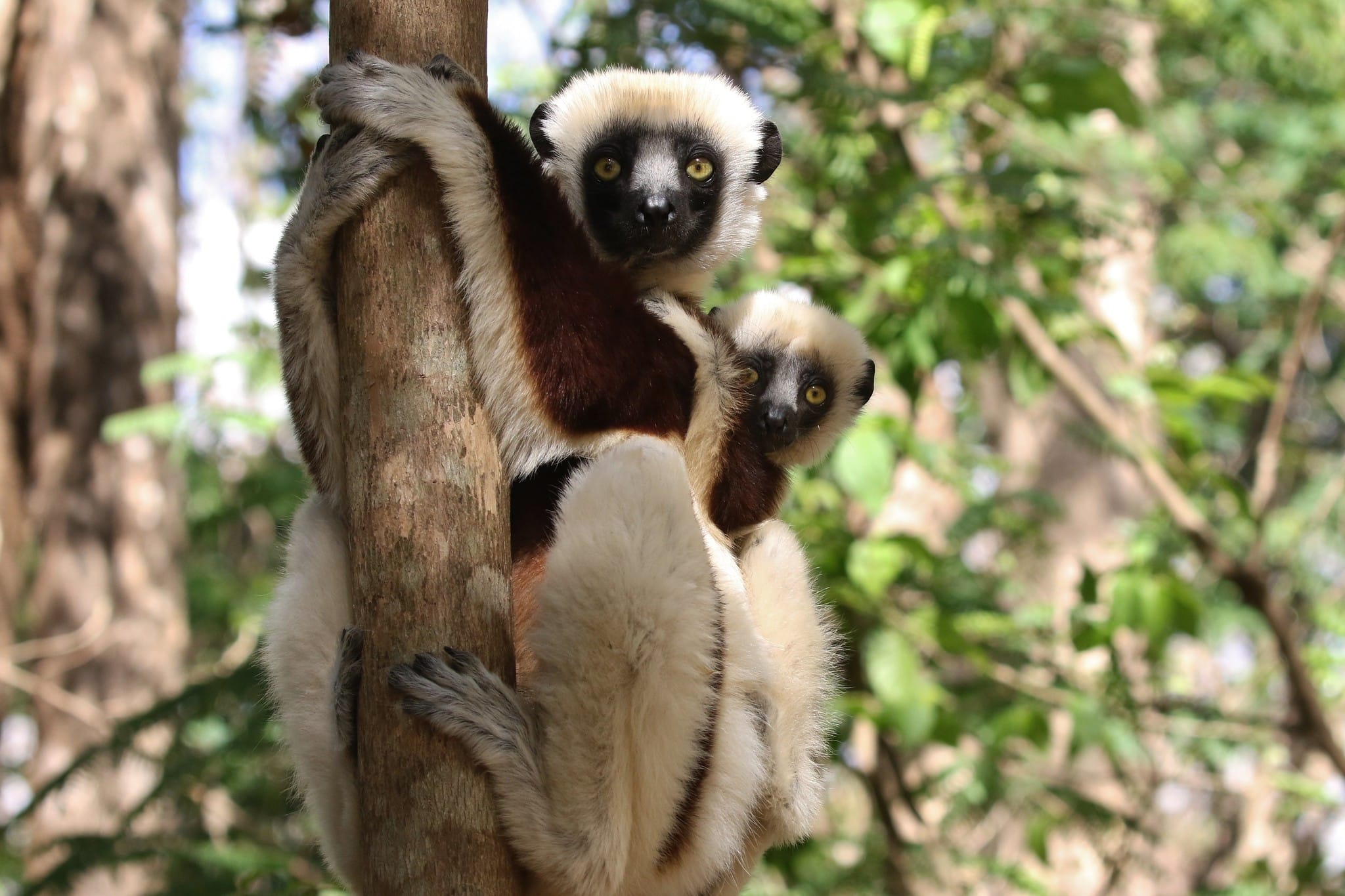
Coquerel’s Sifaka (Propithecus coquereli)
The Coquerel’s sifaka is the sanctuary’s flagship species, and yes, this is the famous “dancing” lemur. These medium-sized lemurs have dense white fur with bold chestnut-brown patches on the chest and thighs.
- Locomotion: They are built for vertical clinging and leaping, launching between trees with impressive agility. On the ground, they move with a distinctive bipedal sideways hop that gives them their dancing reputation.
- Diet: They are mainly folivorous, eating leaves, but they also feed on flowers, fruit, and bark.
- Social Structure: They live in small family groups with female dominance, a common lemur social pattern that gives females priority access to top food resources.
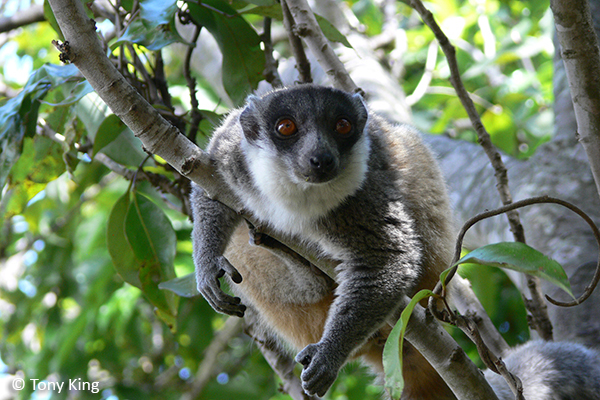
Mongoose Lemur (Eulemur mongoz)
The mongoose lemur is one of the sanctuary’s rarest residents and one of the key reasons this forest matters so much.
- Appearance: This species shows strong sexual dimorphism in its facial markings.Males usually have reddish-brown cheeks and a white beard, while females have white cheeks and a darker face.
- Activity Patterns: They are cathemeral, which means they can be active during both day and night depending on the season. In the dry season, they often shift toward more nocturnal activity to conserve energy and avoid the hottest part of the day.
- Role in Ecosystem: As fruit and nectar feeders, they are important pollinators and seed dispersers in the dry forest canopy.
Other Wildlife at Ambalakalanoro
Lemurs may be the headline at the Lemur Conservation Network, but Ambalakalanoro Sanctuary is packed with endemic biodiversity. So far, 59 bird species and 6 reptile species have been identified here, along with a rich plant community.
- Fanalouc (Eupleres goudotii): This rare carnivore is mostly nocturnal and has a specialized diet focused largely on earthworms and slugs.
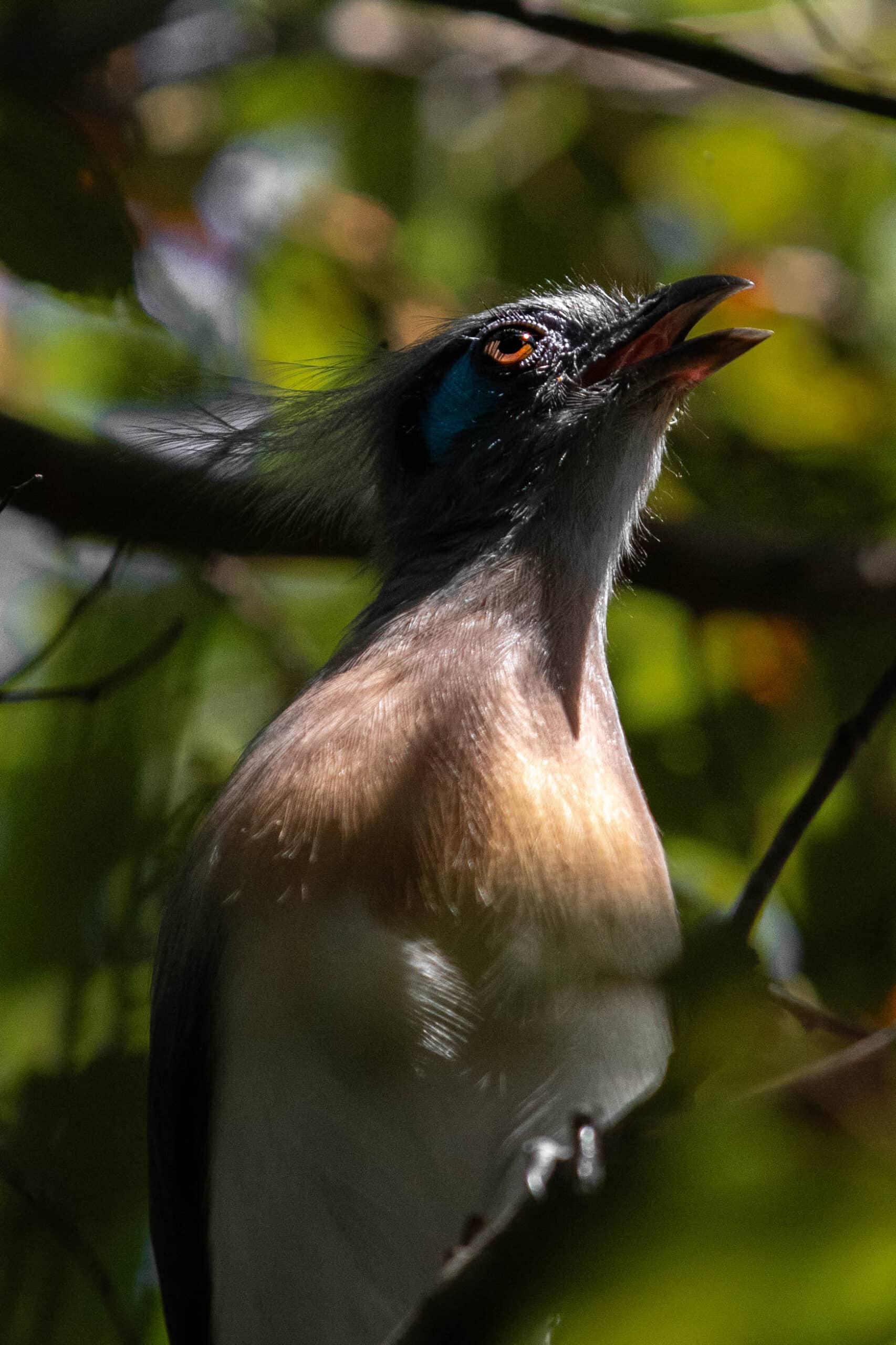
- Madagascar Fish Eagle (Haliaeetus vociferoides): A Critically Endangered bird of prey that depends on the coastal and forested habitats of western Madagascar.
- Humblot’s Heron (Ardea humbloti): An endangered large heron found only along Madagascar’s western coast.
- Day Geckos (Phelsuma kochi): These bright, diurnal lizards are common in the sanctuary, where they hunt small insects and also serve as prey for larger birds and mammals.
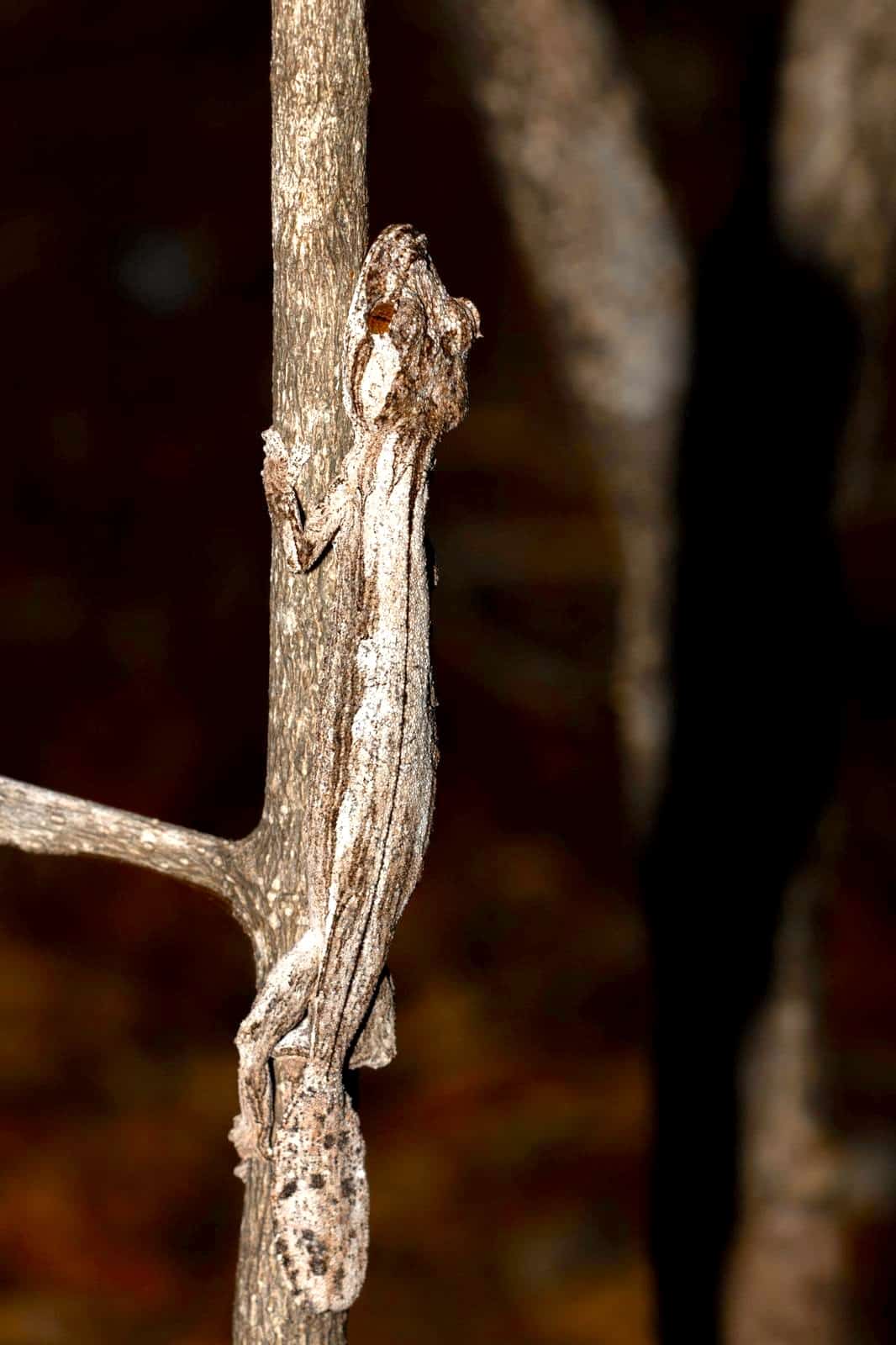
- Leaf-tailed Geckos (Uroplatus guentheri): These nocturnal lizards are masters of camouflage, seamlessly blending into tree bark!
- Endemic Flora: The sanctuary contains 232 plant species, including medicinal plants used by local communities.
About Conservation at the Sanctuary
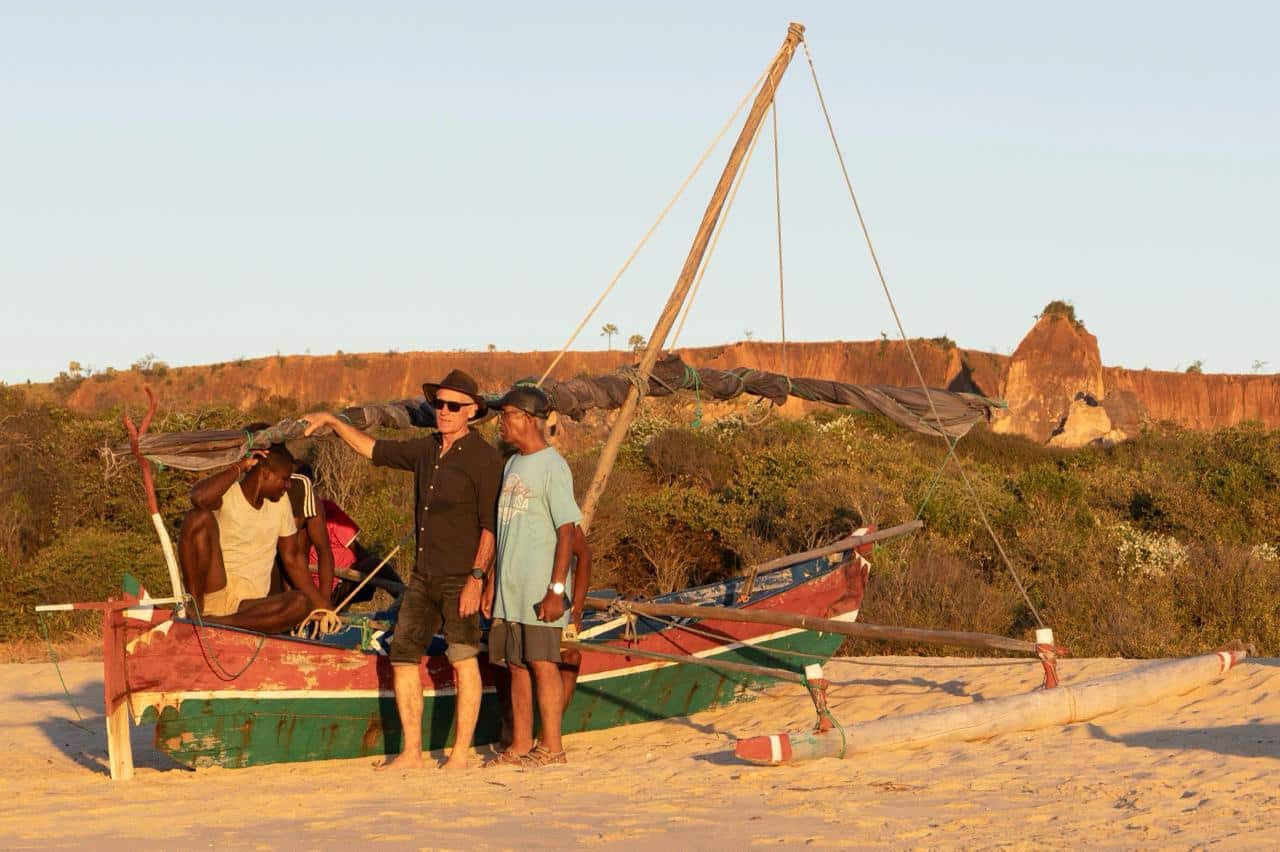
Ambalakalanoro is managed by Man and the Environment, a member of the Lemur Conservation Network. They operate the site under a 99-year lease.
This is a smart example of community-based conservation. Each parcel is mapped, assigned a unique ID, and tied to real habitat protection. The funding from this parcel program supports forest rangers, ecological monitoring, and sustainable development work with local communities.
The project was founded by Olivier Behra, a long-time environmental leader in Madagascar. Important figures in the sanctuary’s history include the late forester Ramandimbison (1958–2025), to whom the current program is dedicated, and Saroy Rasoloson, Director of Man and the Environment. The sanctuary’s work is validated by the tangalamena (local elders), helping ensure that conservation stays aligned with local customs and community needs.
The Ambalakalanoro Model
Buying a parcel is the heart of conservation at Ambalakalanoro. It is a direct, trackable way to help protect real habitat right now. You can buy a parcel, see where it is on the map, and know your support is helping keep this forest intact for lemurs, birds, reptiles, and local communities.
The sanctuary uses a practical, community-rooted approach:
- Transparent Forest Protection: Every m² protected by a donor gets a unique ID and can be tracked through real-time satellite imagery and an interactive map.
- Community Involvement: The tangalamena and local forest rangers are the core guardians of the land. That means conservation here is community-led, not imposed from outside.
- Scientific Partnerships: The NGO works with partners including Université Mahajanga, CNARP, CNRS (France), IRD, and CIRAD to support ecological monitoring and biodiversity surveys.
- Natural Regeneration: Alongside protecting primary forest, the project supports the rebirth of soil and natural regeneration in degraded buffer zones, helping expand lemur habitat over time.
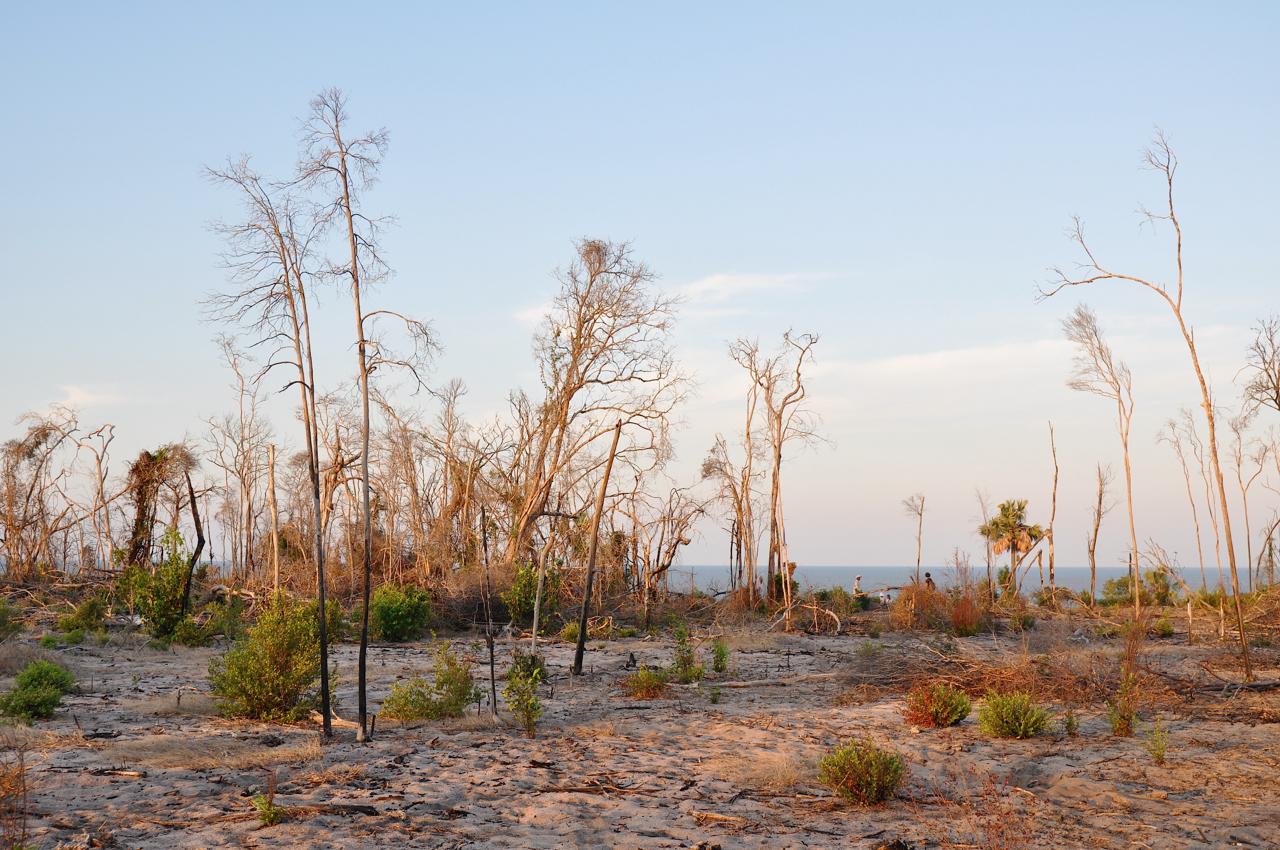
The western dry forests of Madagascar are under intense pressure. Habitat fragmentation driven by slash-and-burn agriculture (tavy), charcoal production, and illegal logging has reduced these forests to small, isolated patches.
That is exactly why this parcel model matters: it turns support into immediate protection for one of Madagascar’s most threatened ecosystems.
Where is the Ambalakalanoro Sanctuary?
Ambalakalanoro Sanctuary is accessible to researchers and travelers interested in community-based conservation and the wildlife of Madagascar’s dry forest.
- Location: The sanctuary is on the northwestern coast of Madagascar and is typically accessed via Mahajanga.
- Seasonality: The best time to visit is the dry season (May to October), when trails are more accessible and lemurs are easier to spot. The wet season (November to April) can make travel much harder because of heavy rain and humidity.
- Visitor Impact: Sustainable tourism is a secondary goal for the site and helps provide an economic alternative to deforestation for local communities. Visitors can see Coquerel’s sifakas in the wild and learn about the medicinal uses of local plants.
Take Action to Protect this Forest for Lemurs
Visit the Ambalakalanoro website, choose a parcel, and help protect primary forest directly. Buy one 10 m² parcel for just €10, or amplify your impact and buy ten parcels for just €100! You’ll get a protector certificate, annual updates, and a real stake in safeguarding habitat for the mongoose lemur and Coquerel’s sifaka.
If you’d prefer to donate through the Lemur Conservation Network so that your donation is tax deductible in the USA, please contact us and make a donation for $12 USD per parcel.
Can you help us protect one of Madagascar’s last lemur refuges?